
Since last month, I was given a big responsibility at my workplace. Nominated by the Founder to be the main POC for all new AI Content Flywheel customers. The AI Content Flywheel contains 2 products. As we march towards a products only company, we are onboarding clients who are not on our CMS. In such scenarios the customer is a brand new customer, not having much background about our company. First time interactions.
The organisation I am presently working provides AI Native Digital Experiences.
First time interactions with brand new customers needed clients be impressed by the product leading them into product adoption. I knew learning material is what I needed.
As they say, with great power comes great responsibility. I knew from the moment I was handed this new mandate I had to shift how we interact with customers. From a 100% services company to a 100% product one, the way we message customers needed a strong pivot.
We wouldn’t be getting the usual time to interact with each and every customer like how we used to. That was the services mindset. We needed a product mindset. The products are designed to be self served.
All communications should be catering to one point and one point only. When you use our GEO Intelligence tool, how is it going to make your life better, more optimised with smart recommendations and actionable steps?
With this goal in mind I was clear I had to make videos. Videos is the medium of choice when it comes to media consumption. I can share videos with clients at scale. A lot like how AHREFs or SemRush has been publishing helpful videos on how to use their product.
Yet still I wasn’t able to understand how should I put forward the communications in a generalised format. The learning materials needed to be designed such that all types of customers are able to understand how best to utilise the tool. At the same time, not revealing any confidential information about other customer is something I needed to be careful about.
I was in a discussions with a colleague, who in a matter of mins solved the dilemma I was going through for more than 2 weeks. This is so much in line with what I wrote a few days back. Feedback coming in from very close people will 99% of the time would be very helpful.
“Take screenshots from the tool and ensure we blur out any portion which can reveal confidential client information”, said my colleague. I was hesitant at first.
Editing a video where I need to blur out multiple text fields hiding client information is not scalable. The work itself is not reduced, it got shifted to the editor who needs to do the work now. That in my opinion is not optimizing, but basically putting the work on another person.
A workaround we decided – have screenshots taken out, putting them in a presentation and blurring out the textual elements containing confidential information. Once the presentation is completed, I can open it up as a screen recording and explain how various clients are using the tool. That way a video gets created yet at the same time the pressure on editing the video blurring out multiple textual components wouldn’t be required. That’s exactly the kind of mindset we need when we are working at a startup, trying to capture market share.
The discussions which I had with my colleague barely lasted 15 mins, yet the solution we found was invaluable.
I plan on utilising next week to come up with communication messages learnt from a YouTube video I saw yesterday. It was explaining how to sell a product in a framework, all through communications and smart messaging. The one thing I loved about the video, the concept of messages which are less stressful for the cognitive mind.
Look at the screenshot from his framework. The first step is building curiosity, followed by enlightment and lastly prepping for the sale, i.e. commitment.
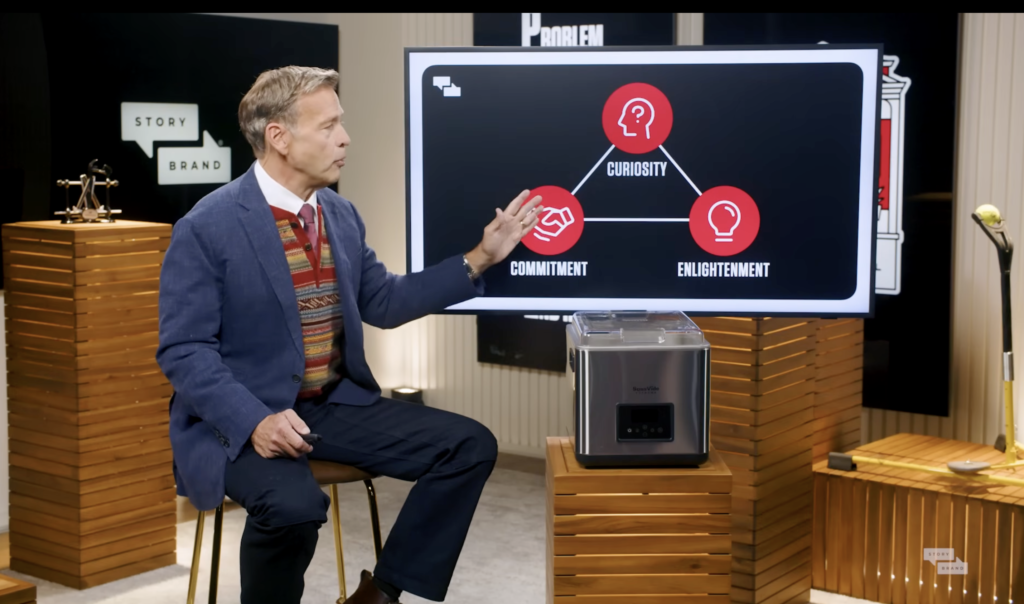
Go watch his video if you’ve got 9 mins. Its one of the best 9 mins that you would invest when you are looking at selling.
Till next time, start taking feedbacks. The people whom you trust will 9 out of 10 times give you great feedback. Working on them and measuring progress can definitely help you check if the feedback is working or not.
Feedback loops are extremely important. Do you have them in your workflow? How do you use them? Would love to know your thoughts.
Thanks
DB
25th April 2026